A Family Doctor Rant

I love my job and particularly enjoy taking care of my patients. Most of the time. Every once in a while I find myself in an unexpected debate with a patient over a straight forward issue. Some of these debates make me want to scream. In order to save my lungs and my sanity, I have decided to resolve some of the debates here.

1-Cholesterol medications are safe.

They have been prescribed for decades and have a long record of safety and effectiveness. They decrease heart attack risk by 20%. If you run into the patient I saw recently who was convinced that everyone who takes statins has complications and felt the need to argue this with me, tell him he is just plain wrong.

2-Colon cancer screening is the best cancer prevention test ever.

1 in 20 Americans get colon cancer. Less than 1 in 2000 people have a complication from colonoscopy. Sorry, patient who “had a friend” who told her the procedure was dangerous, but when you are 100 times more likely to be helped by a test than be hurt by it, you should get the test done.

3-Diabetes is a serious disease that needs serious attention.

Particularly for those individuals who are on insulin, consistent meals, in both timing and content, are a crucial part of managing the disease. Some of my patients with sky high blood sugars try to tell me that they can do it “their way”, but they are wrong. Winging it doesn’t work with diabetes.

4-The Physician/Patient relationship is a true partnership.

Good health care happens when patients and doctors work together. No, Mr. High Blood Pressure, you don’t get to take your blood pressure medications 3 months out of the year and expect to remain a patient in my practice! An essential truth about medications- they don't work if you leave them in the bottle!

5-“Feeling Good” and “Being Healthy” are not the same thing.

One might think, given all of the focus on prevention, that this truth was obvious. It isn’t. We have many patients who refuse to come in for follow up, refuse to get tests done and who haven’t had a check up in years. This is understandable when someone is 20 years-old but hard to accept when someone is 75. I had no choice but to accept it this week- a patient  hung up on me when I called to remind him!

I share these stories for two reasons. The first is to encourage people to not be one of these patients. Doctors do have the best interests of patients in mind and work hard to do a good job. It is incredibly frustrating to have to argue to get people to do the right thing. The second reason is to encourage a little grace when your doctor is grumpy. You never know what he may have been dealing with in the previous exam room!

Bart

Thanks for reading, for your comments and especially for taking the time to share the post with others. remember you can follow me on twitter @bartbarrettmd, or subscribe to the blog to have posts delivered to your email.

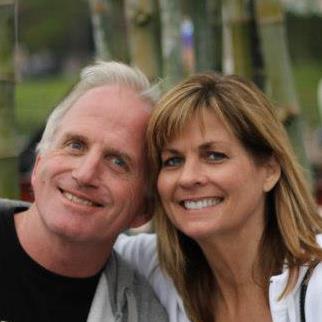
Ignorant. Naive. Married

We were not ready for marriage. We were young, in love and we had no idea what we were getting into. I had a part-job, no money in the bank, an 8-year old Ford Mustang in questionable condition and lacked definitive career plans. Lisa’s marital resume was limited as well but much more impressive.  She had money in the bank, a full-time job as a registered dental assistant and a solid head on her shoulders. Her Mustang was a classic, built in 1965, and paid for. 

People told us we were too young (I was 20, Lisa was 21) and that we hadn’t been together long enough (we had known each other for 5 months). The pastor was stern when he told us that he had serious concerns about our prospects. My reply, “We love God and we love each other, what more do we need?” was dismissed as simplistic and immature.

We didn’t listen to the naysayers. On July 16, 1982, in our church in Fullerton, Lisa walked down the orange-carpeted aisle of the chapel, took my hand and agreed to be my wife. The ceremony was short and simple. It was an evening wedding and the night flew by. Our reception at the church consisted of cake, punch and a receiving line. We had changed out of our wedding attire and were on the road to our honeymoon shortly after 10.

Our honeymoon was simple as we were poor and could not afford anything extravagant. We went to San Diego, where we went to the beach, Sea World and the zoo and spent the week loving the fact that we were together. It was strange to be alone together and away from home on our own. It was so new, we felt as if we were doing something wrong and could get caught at any minute, or wake up and be alone again. It was new and strange, but we were happy.

34 years later we are still happy. Loving God and loving each other was enough, as we have aggressively pursued both goals. Because we love God, we share common values that have allowed us to find our way through disagreements and been willing to admit we when we are wrong. We understood that love is more than a feeling and we have been committed to putting each other ahead of ourselves, to forgiving one another and encouraging one another. It has not always been easy but our future together has never been in doubt.

Each year on our anniversary we look back on our young selves and laugh at how idealistic we were, how clueless we were, and how unprepared we were for all that was ahead of us. And we thank God for the truth that we would do it all again. 

Bart (& Lisa) 


&%#@- Words Matter

“It was f---ing crazy!”

Foul language doesn’t usually surprise me. Over the last few decades vulgar speech has become increasingly common and can be heard in almost every setting and circumstance. This particular instance of the f-bomb caught me off guard because of the speech that had preceded it.

The F-bomber and I had just been engaged in a casual conversation at the gym. We do not know each other well but we have had a number of gym conversations, enough for us to know one another’s professions and injuries. There had also been enough passing references to faith to lead us to consider one another to be Christians. On this particular evening he had talked about his pastor and how he had been helping the pastor get in better shape.

Thirty seconds later, while talking with someone else in the gym, his speech became more colorful. I was surprised, not by the fact that he swore, but at the ease with which he transitioned from spiritual to vulgar dialogue. It was clear that he did not think word choice mattered at all.

The next morning I had a medical appointment to get my knee brace adjusted. The brace adjuster is a nice man I have seen on a number of occasions to get my custom brace sized and fitted. In the course of our session I had learned that he was active in his church, hosting a small group Bible study and serving as a camp counselor for a week each summer at a camp for troubled children. In the course of my brief visit with him he used all of the language I had heard in the gym the night before. He did so with ease and without hesitation. It was clear that this was how he talked all of the time. I drove home thinking, “When did Christians quit caring about the language they used?”

My childhood home was anything but Christian and vulgarity was common. My step-father had been a sailor and he cursed like one. Like the father in the movie “A Christmas Story” profanity was an art form to my step-dad. In spite of his foul language I grew up with a clear understanding of the difference between good words and bad words. I learned that good people used good words whenever possible.

While I may be out of touch with current social mores, my sense that there are words that should not be spoken by good people, particularly Christians, is not a belief of my own invention. The idea that there is speech unbecoming godly people was clearly described by the apostle Paul almost two thousand years ago-

“But among you there must not be even a hint of sexual immorality, or of any kind of impurity, or of greed, because these are improper for God's holy people. Nor should there be obscenity, foolish talk or coarse joking, which are out of place, but rather thanksgiving.” Eph 5:3-4 NIV

Paul makes it clear that what we say matters. Christians are to be heavenly minded people who are continually thinking of the world in the context of their faith. As people who embrace the reality that we have been saved from our sin and called to be different we should seek to be better and different in every aspect of our lives. The desire to be different and better should extend to our speech as well as our actions. True followers of Christ take His teaching that “the mouth speaks out of that which fills the heart.”

Taking Jesus’ words to heart leads to the conclusion that our words matter. When, over and over again, God calls His people to be holy, he is calling His people to be clearly distinct from the world around them. It seems this teaching that Christians need to strive for higher standards of behavior has been swept under the church carpet.

My greatest concern is not that Christians use bad words. Far more important is what the casual use of profanity represents. Too many Christians are no longer concerned with sin. Excellence is no longer a virtue or a goal. It seems that many believe it more important to display our commonality with those outside the church than it is to show our differences. We are more concerned with being “one of the guys” than we are with being “one of the chosen.”

People of faith will do well to consider Paul’s instructions in a letter to his friend and protégé Timothy to “set an example for the believers in speech, in life, in love, in faith and in purity.” 1 Tim 4:12

Bart

Thanks for reading and for sharing. Comments and questions are welcomed. 


Why Would Anyone Want to be a Police Officer?

I posed the question to a police officer this week and he could not give me a good answer. Morale among officers is the lowest he has ever seen. He is not alone in his thinking as I have received similar answers from other officers. The job is difficult, dangerous and increasingly thankless. For these reasons many officers are considering leaving the profession and there is a fear that the quality of future officers may be on the decline. Excellent candidates may choose other careers.

In California recent law changes have made it easy on criminals and hard on everyone else. A state ballot proposition passed in 2014 converted many felonies into misdemeanors and made many crimes the equivalent of a parking ticket. Repeat offenders who used to get jail time are now given nothing more than a citation and sent on their way. The inability to remove many lawbreakers from the streets has been demoralizing to officers who want to protect society.

Recent events have highlighted the dangers that officers face on a daily basis. While shootings such as the one in Dallas get national coverage the dangers of the job are not limited to firearms. Police officers often find themselves attempting to detain uncooperative suspects who are bigger and stronger than they are. A police officer patient of mine recently related a terrifying story of fighting for his life. He was in a five-minute fight with a suspect in the midst of a hostile crowd. Punches were thrown, bodies were slammed into cars and weapons were drawn. It never made the news but it left him seriously shaken.

This officer and others like him have told me that they often worry about being killed or injured. They all relate the same primary goal. They want to go home alive at the end of the day. Many have told me of fearful spouses who have difficulty sleeping while their loved one is at work. Stress levels are incredibly high and depression and anxiety are common.

For men and women in a career filled with danger and stress attacks on the profession wage a heavy toll. When protestors march and chant about harming cops and when racism is assumed in every interracial interaction officers are on edge. Their work has become so highly politicized they fear that every interaction carries the risk of criticism and disciplinary action. One officer I know discharged his weapon at a suspect who was reaching for a gun while holding a hostage. Even though he missed and no one was harmed he was subjected to a grueling and demeaning performance review that lasted for over a year.

Adding insult to injury is the fact that many officers are not paid well. Starting salaries in the United States are as low as $26,000 a year, about $12.50 an hour. Patrol officers make on average less than $40,000 a year in 11 states and less than $50,000 a year in over half of the states. We cannot expect the best and brightest of our citizens to put their lives on the line when we do not pay them well or appreciate them enough.

Recent police shootings illustrate another seldom discussed reality of police work. Even well-trained, educated and experienced officers can sometimes struggle to perform in high stress situations. It is one thing to know what to do and to be trained on what to do. Doing it in a life or death situation is a different story all together. I have seen this in my own profession. I have observed firsthand as experienced doctors who had passed all the tests and completed all of the training melted down in a life or death situation. They had good intentions and wanted to do well but they did not have the psychological make up to perform under intense pressure. Regardless of training, we cannot escape the reality that we are all human.

I wonder if this is not a major factor in many police shootings. As I watch the videos from Minnesota and Louisiana I wonder if panic and fear were the primary factors leading to poor decisions and actions by the officers involved. From what I know of police officers, and about people in general, this is far more likely than racism to be the root cause of the tragedy.

If we want to minimize police errors and mistakes we will have to create an environment in which the best and brightest among us pursue careers in law enforcement. If we continue to attack and question the motives of police officers, if we paint with a broad brush and accuse them of racism or other ill motives, if we continue to pay them poorly and treat them poorly, the best and the brightest will turn to other careers. All of us will suffer as a result.

Bart

Thanks for reading, and especially for sharing posts with others. "shares" are the life blood of a blog! Future posts can be delivered to your inbox, just click on the subscribe button (top right on a desktop, scroll down on a mobile device), or follow me on twitter @bartbarrettmd.

When does Serving Become Enabling?

image.jpg

Get a group of Family Doctors together to talk about improving patient outcomes, any outcome, and one question is certain to come up, “What is the patient’s responsibility?”

Doctors are measured against a number of standards. Each month I get reports on the percentage of my patients who have had colon cancer screening, mammograms and pap smears. For diabetic patients the list is extensive and includes blood pressure control, cholesterol medications, blood sugar control and whether or not the patient has been screened for kidney disease.

In my office, staff members review the reports and make phone calls and send out electronic reminders to encourage patients to get the necessary tests and treatments. Every time I look over the list of names and review the charts I see that regardless of the test or screening all of the patients have something in common. Every one of them has been previously told what the tests were and been given the necessary orders and referrals to get them done. They just haven’t bothered to do it.

It is a source of unending frustration for doctors. We went to school to be doctors, to care for disease and provide treatment to patients under our care. None of us signed up to be patient care reminder professionals. Yet that is what we are becoming. My medical group recently announced a new quality measure that illustrates the absurdity of it all. We are now being measured according to how consistently our patients pick up their prescriptions at the pharmacy. Telling a patient to take a medication daily and sending the prescription to the pharmacy is not enough. If they don’t pick up their refills consistently we are held responsible!

Too many patients do not prioritize their health and instead expect their doctor to pick up the slack. Several months ago a diabetic patient came to our office for an initial visit. We started a new blood pressure medication, ordered the appropriate lab work and asked the patient to return in a month. Four months later the patient returned. The blood work had not been done, so the order was sent again to the lab.

Two months later, 6 months after the initial visit, the patient called the office requesting a refill of his medications. I checked the chart and saw that the patient still had not been to the labs. Reluctantly I decided I needed a firmer response. I left a voice mail and sent an electronic message saying that we wanted to partner with him in the care of his diabetes but that he had failed to follow our recommendations in spite of repeated calls from our office. I told him I would refill his medications for 5 days to allow him time to get his blood work done and be seen in the office and that no additional refills would be given until he was seen.

Nine days later on a Saturday I received a page from the patient. He had been to the lab that morning but he was out of his medications and he wanted an urgent refill. I was unable to hide my frustration when I returned his call. I reminded him that I had told him that he had to get his labs done and be seen in the office but that he had failed to follow my advice.

“So you are going to deny a diabetic his medication?” was his angry reply. My reminder that his lack of medication was a result of his personal choices did not go over well. He started to argue with me and I wondered what to do. I finally decided to offer a compromise.

“I’ll give you three days of medications and see you in the office Tuesday morning,” I said. He begrudgingly agreed. Before hanging up the phone I shared with him a truth that I often share with similar patients saying, “You know, If I care more about your diabetes than you do, there is something wrong.”

What was wrong with this patient is what is wrong with many patients. For a multitude of reasons, many of them understandable, patients fail to take care of themselves and to follow recommendations. Twenty years ago they alone suffered the consequences of their poor decisions. What few of them understand is how their poor decisions impact the physicians providing their care and how these consequences put a strain on the doctor/patient relationship.

As a physician who is committed to providing the very best care for his patients I find myself frequently wondering if I am enabling instead of serving, if there is a point when going the extra mile is actually a disservice to my patients, and how to determine when that point has been reached.

Although I think this patient may have reached it…

-          Bart

Thanks for reading, and especially for sharing posts with others. If you subscribe to the blog posts will be delivered to your inbox. Or follow me on Twitter to be notified of new posts. Comments and Questions are welcomed!