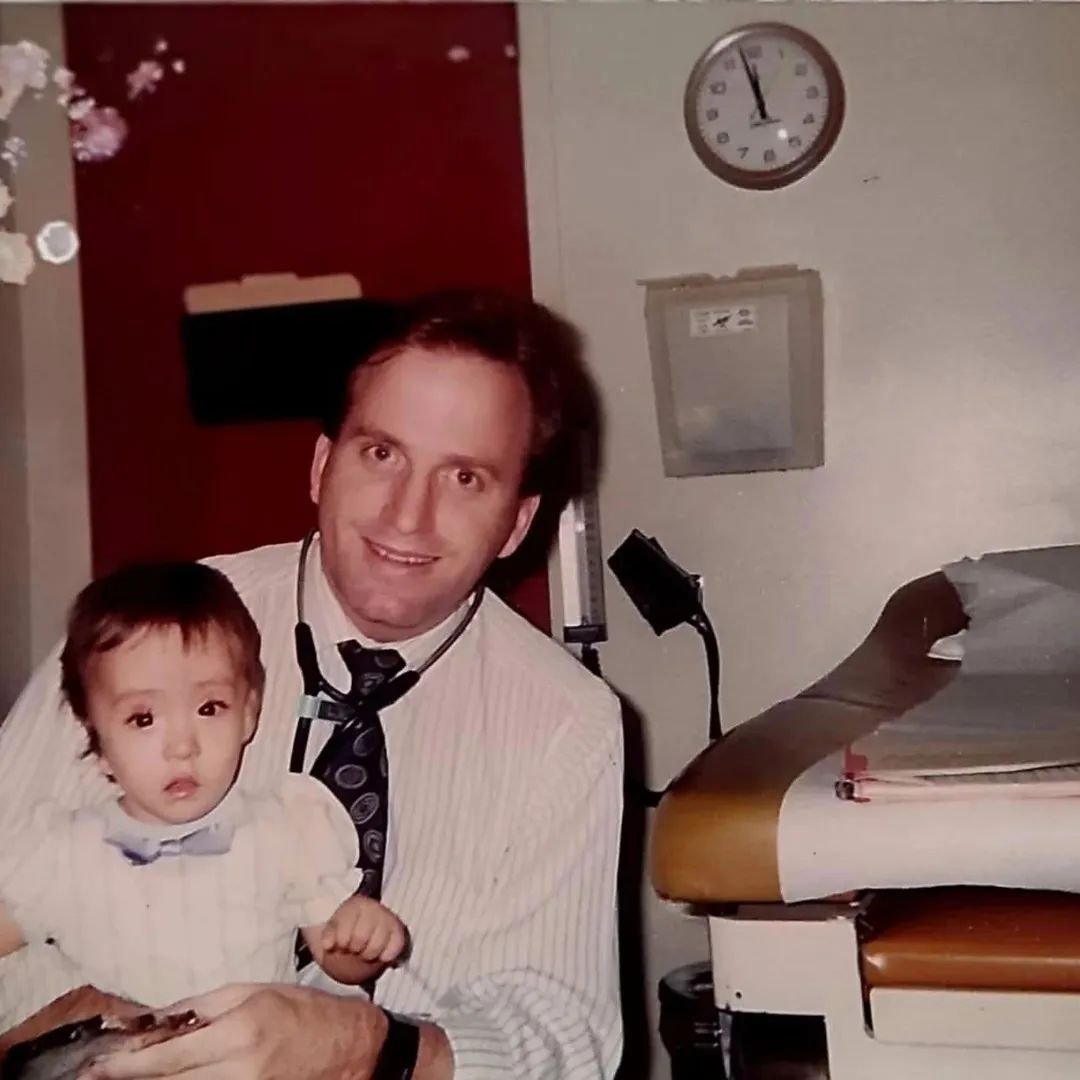
I began my Family Practice training thirty-six years ago expecting it to be the most difficult years of my life. I had warned Lisa about the hundred-hour work weeks and nights on call to come (for much of the year I would stay at the hospital every fourth night) and prepared myself as best I could for the tsunami of information I would be required to learn and the continuous stress of making life and death decisions on a regular basis.
Times have changed, but Family Medicine residencies in the 1990’s were required to organize their training as if every physician that passed through their program would one day practice in a rural setting. As a result, we delivered babies, assisted in surgeries, cared for patients in the ICU and Emergency Room, and managed both pediatric and adult patients in the hospital. Outpatient assignments included everything from the Family Practice Clinic to the offices of allergists, dermatologists, ophthalmologists, orthopedists and other specialties. No one expected us to master so many subjects, but I was determined to learn as much as I could and become an expert in the common conditions in each specialty.
One might think such determination would be considered praiseworthy by my instructors, but the opposite seemed true. The residency was located in a community hospital in the San Fernando Valley just north of Los Angeles, and the unspoken but consistently acted upon assumption was that its doctors would end up practicing in an office in an urban or suburban setting. Mastery of specialty or hospital care was neither required not expected, and my pursuit of excellence was seen as more disruptive than honorable. I was viewed as someone with a superiority complex needful of humility, not someone struggling to do his best, and I battled loneliness and feelings of isolation all three years.
To make matters worse, the long hours made regular church attendance and fellowship impossible, separating me from the support network on which Lisa and I had always relied. Unable to participate in ministry, I felt isolated from God and spiritually useless. I could not wait for the day that I would be freed from that hospital and free to serve God again.
The sadness and emotional pain did not diminish my commitment to learning, and when the three years ended, I felt well-prepared for medical practice. When we moved to Huntington Beach, I quickly volunteered to serve in church and moved on with my life. I held on to the medical lessons I had learned but nothing else, convinced I there was nothing worth hanging on to. It was not until November 20, 2025, that I learned how mistaken that thinking was.
The converted house that had been home to my medical practice had entered escrow, and I was going to be closing the doors forever on March 1, 2026. I decided to post a brief announcement on my office Facebook page informing patients of the date, knowing many might want to change doctors before the end of the year. The expected “Oh No’s!” and “Thank You’s” filled the comment section, joined by a completely unexpected message that hearkened back to dark years of my residency training-
“You probably don’t remember me, but I’ve heard your name all my life. That’s because you helped my mother give birth to me 34 years ago. Your story intersected with my family’s at one point in time and left a profound impact since then. The words you once spoke to a young, Mexican woman who had just given birth, and was on the verge of dying in the ICU, are etched in our hearts. They have been recounted over and over to many, many people, testifying of the Grace and Mercy of the God we love and serve. I hope to meet you one day sir. All my love, respect, prayers and kind wishes for this new beginning for you and your practice.”
I gasped when I read the words, as memories of the woman and her condition exploded in my mind. I knew exactly who she was, and while I did not recall the specifics of our conversations, I remembered the crisis that nearly took her life in vivid detail.
I was three months into my second year of residency training, assigned to the Obstetrical service. Mom presented to the ER at about 25 weeks of pregnancy saying she had been bleeding profusely from her vagina. The ultrasound that followed confirmed the ominous diagnosis- complete placenta previa. (Instead of landing and attaching higher up in the uterus as is normal, the baby had implanted down low near the cervix, the opening of the uterus. As the placenta developed it grew completely over the cervix. As a result any dilation of the cervix would result in immediate, life-threatening hemorrhage.)
Mom, husband and two young children were visiting Los Angeles from Mexico and were scheduled to return home the next day. We had to inform her that she would not be leaving the hospital. She would be confined to a hospital bed until the baby had grown enough to have a good chance of surviving (at least 30 weeks) or until she started to bleed.
In the days that followed I checked on her a few times a day, in my broken Spanish encouraging her as best I could. She made it to 27 weeks and 4 days. I was standing at the nurse’s station when I heard the nurse in her room scream, “She’s BLEEDING!!!” (I can still hear those words in my mind.)
I dropped my pen and ran to her bedside. The sheets were pulled back, and blood was pouring out of her like a faucet, filling the bedpan between her legs. Desperate to quantify the blood loss, I dumped out the water pitcher on the bedside table and emptied the bedpan into it, filling it all the way up to the top, past the line that marked 500 ml. She had lost nearly 10% of her blood volume in under a minute. She was literally bleeding to death before my eyes.
“Get her to the OR now!” I shouted to the four nurses in room, “And start another IV, with the biggest needle you can find. MOVE!” The nurses sprang into action, and within seconds the bed was rolling out the door.
I desperately wanted to assist in the surgery, but it was the intern’s responsibility, and I was already late for my afternoon clinic. I headed for the elevator and did the only thing I could do in that moment- I began to pray.
I raced through my patient schedule as fast as I could, but three hours passed before I could return to the OB floor. I arrived at the nurse’s station to find the anesthesiologist sitting there, white as a sheet and trembling. “What happened?” I asked, “Did she make it?”
“We nearly lost her three times,” she replied, “If you hadn’t asked for that second IV, I would not have been able to save her.”
My memory beyond that moment is sketchy at best. I remembered that the baby was very small, about 2 pounds, and that she was born missing one of her ears, but little else. For the next thirty-four years, the story have lay buried in my memory, resurfacing only on the rare occasion when I had another patient with a low-lying placenta. After I ended my obstetrical practice in 2007, the story remained filed away in my mind. Which is what made the Facebook comment such a surprise.
My heart was racing as I quickly typed a reply. “Noemi, was your mom the patient with the complete placenta previa who delivered at about 27 weeks?” Anxious to know the answer, I visited Noemi’s Facebook page and looked through her photos to see if I recognized her mother. I instantly did. I went back to the comment and added another reply. “Noemi, it is her! I looked at your profile and recognized her photo. One of the most vivid memories of my life.”
“Theirs too!!” Noemi replied soon thereafter, “Their eyes still shine with excitement when they tell someone new about it. Such a God-given moment and miracle.”
More messages and texts followed, and I quickly learned some of what God had done in their lives. Dad, of whom I remembered nothing, had become a Christian pastor. Mom, aa devout Catholic at the time I met her, had made a commitment to Christ as well. Noemi, the premature baby, had overcome multiple challenges before becoming a special education teacher in El Paso, Texas. The family was anxious to “see” me again, and we scheduled a video call via What’s App for a few days later. I will never forget the mother’s response when my face appeared on screen. Her hand went reflexively to her chest and she gasped involuntarily, as if unable to believe her eyes. She was that excited!
The conversation was only a few minutes old when Rosario (the mother) and David (the father), told me they very much wanted to see me again. They now live in Chihuahua, Mexico, four hours by car south of El Paso, but they were willing to fly to Los Angeles just to visit me. Noemi said she would join them, and they all thought that Noemi’s older sister would want to come as well. Their excitement moved me, but I told them it did not make sense for all of them to fly to California. “It would be easier for me to visit you,” I said, “I am just one person.”
Within days the trip was arranged. I would fly to El Paso in May 2026, joined by my friend Omar, a Spanish-speaking man who oversees our denomination’s outreach to Central and South America. As the months leading up to the trip passed, I experienced a mixture of hope, trepidation, excitement, and fear. I wondered if we would have enough to talk about, and if I would not live up to their expectations. I ultimately told myself that God was in control and did my best to trust Him for what would happen. It was, after all, only going to be a two-day trip.
Three weeks before the trip I received a message from Mimi (Noemi) that caught me off guard. “Mom and Dad are wondering if you have a title for the sermon you are going to preach that Sunday,” she wrote.
“I’m going to preach?” I replied.
“They thought you would want to,” she answered. To let them know where I was at in my life I had sent them a link to a sermon I had preached in Santiago, Chile a year earlier. They had apparently decided that if I could speak Spanish well enough to preach in Chile, I could speak it well enough to preach in Chihuahua. They did not know that my Spanish consisted of 6 months of Duo Lingo and the ability to use Google Translate. I said yes nevertheless, deciding to use the previous sermon that I knew best.
We flew into El Paso on May 16. Mimi met us at the airport, flustered by the knowledge that she was meeting the man she had heard about her whole life. Her mom and dad had decided to drive the fours up from Chihuahua to greet us as well but were at that moment delayed at the border. After a quick lunch at a Mexican restaurant, we made the decision to meet them in Ciudad Juarez in Mexico. The reunion was joyous and emotional, marked by firm embraces, and we were soon on our way. We met up in another Mexican restaurant when we reached Chihuahua.
While we waited for our food to arrive, I asked Rosario the question that had been on my mind since the day Noemi had reached out to me on Facebook. “How much do you remember from those days?” The story she shared in reply left me dumbfounded.
They had come to Los Angeles to visit David’s sister. They had a farewell dinner at his sister’s house, and on the way back to their lodgings Rosario began to bleed, soaking the sheets with more blood than either of them had ever seen. Panicked, they called 911, expecting to be taken to a University Center. Much to their dismay, they found themselves in the Emergency Room of Northridge Hospital. Their fear and disappointment increased profoundly when they were told they would not be able to return home until the baby was born.
For the next few weeks, they saw a different attending Obstetrician every day as no doctor was willing to assume responsibility for a Mexican woman with a dangerous pregnancy complication and no medical insurance. The only physician who stayed on her case was me. My Spanish was poor, but they could tell that I cared and that I was a person of faith.
Their memories of the day she bled are even more vivid than mine. Rosario’s recollection of being rushed into the OR and being given anesthesia left me horrified. The medication left her unable to move but did not put her to sleep or take away the pain. She felt every cut of the knife and every tug on her body. She tried to scream, but could not. After the baby was born, she says she found herself in a beautiful, brightly lit garden. She felt a strong sense of peace and felt drawn toward the light. She felt a desire toward it, but she turned around and saw her husband standing behind her with her two children. Knowing they needed her, she said she had to stay with them.
While this was happening with Rosario, her husband was standing outside the operating room, far enough away that he could not see what was happening inside but close enough to hear. He heard doctors and nurses shouting urgently, heard someone shout, “Clear!” and heard the sound of the defibrillator shock. Several minutes passed before a Family Medicine attending stepped into the hallway bearing a somber expression. “I am sorry,” the doctor said, “we did everything we could, but we could not save your wife.”
David was still trying to process the news when a nurse came running. “We got her back!” she cried. Almost immediately, David was alone again. The battle was far from over.
Mimi’s placenta had not only grown over the cervix, it had buried into the wall of the uterus itself. After delivery placentas typically can be easily peeled away from the uterus, after which uterine muscle contractions pinch off blood vessels and stop the bleeding. With Placenta Accreta, the condition Rosario had, the muscles cannot contract normally. The only solution is an emergency hysterectomy. In a patient already compromised by blood loss, this can be deadly. In Rosario’s case she had bled so severely that she required 15 units of blood, multiple packs of platelets, and numerous bags of IV fluid. She had three times despite these transfusions and infusions.
I have no memory of it, but Rosario vividly remembers me coming to see her in the ICU the next day and loudly proclaiming, “You are a miracle!” I apparently looked at my watch and told her that from that moment onward, she needed to live to honor that miracle. (I don’t remember it, but it sounds like something I might have said!) She was very worried about what would happen to her newborn daughter, and she says that I read to her from the Bible. (I sometimes carried a pocket-sized New Testament in my lab coat.) The passage I chose was from Philippians 4. “Do not be anxious for anything, but in every situation by prayer and petition, with thanksgiving, present your requests to God. And the peace of God, which transcends all understanding, will guard your hearts and minds in Christ Jesus.” How I was able to communicate these words in Spanish/English I will never know, but they were of great comfort to Rosario. She took them to heart, and trusted God to take care of her daughter.
Over dinner I learned that Mimi’s missing ear and hearing loss were a result of an infection with German Measles earlier in Rosario’s pregnancy. Mimi has endured multiple surgeries, including construction of a new ear and the placement of Cochlear implants. Against all odds she is able to not only hear, but to sing in a voice that is hauntingly beautiful.
I could not believe my ears. Somehow, in the midst of the worst time of my life, I had spoken words that had not only encouraged a desperately ill patient in her hour of need, but had encouraged her in her journey of faith. God’s provision in Northridge Hospital was the spark that lit the fire of faith in Rosario’s heart.
In church the following morning I sat beside Rosario as her son led the singing. I sang along in Spanish, surprised by how much I could understand. As the singing was about to end Rosario tapped me on the shoulder and directed my attention to her Bible. It was open to the passage in Philippians 4. In the margin next to those verses was written, “4 September 1991 Dr. Barrett.” Mimi explained that this was the fourth Bible Rosario had owned since that date, and one of the first things she did with each of them was write those words. For one of many times that weekend, I was nearly overcome with emotion.
The sermon went well, better than expected, and I returned to my seat expecting David would bring the service to a close. To my surprise he was joined by Rosario, who proceeded to tell anew the story of Mimi’s birth. When she reached the end of her story, they motioned for me to join them. When I seemed surprised, my friend Omar leaned over and said, “They want to honor you.”
I went and stood by Rosario, not knowing what to expect. They reached into a bag and pulled out a wooden plaque with an engraved metal plate bearing these words-
Presented to
Dr. Bart Barrett
With deepest gratitude and profound appreciation for your years of
Extraordinary service, compassionate care, and steadfast faith.
Through both your medical care and your prayers, you have been
And continue to be a true blessing to our family.
Your presence has brought not only healing, but also comfort, hope,
and strength
We are sincerely grateful for your kindness, dedication, and lasting
Impact on our lives
With enduring gratitude and appreciation,
Familia Del Castillo
May the Lord bless you and protect you.
May the Lod smile on you and be gracious to you.
May the Lod show you His favor and give you His peace.
Numbers 6:24
Chihuahua, Mexico, May 2026
Four months have passed, but writing those words continues to bring tears to my eyes. For three long years I battled loneliness and depression, trying to endure until I could one day serve God again. For thirty-four years I had lived my life completely unaware of how powerfully God had used me during that time. Without knowing it, I had impacted a family in a way that had impacted them forever.
The lessons of that Chihuahua trip are incredibly important to me now. Stricken by a small fiber neuropathy that causes constant pain in my arms and legs, I am unable to work full days. It is what forced to close the medical practice that had been my primary ministry for the last thirty-three years. I am so limited by pain that something as simple as walking around the block can bring a crippling pain flare that makes life itself seem unbearable.
In the midst of such pain, I often cry out to God and ask, “Where are you? What are you doing?”
The lessons of Chihuahua are God’s reply. “I am here, and I am moving.”
- Bart